WITH ANAVIS MACHINE VISION SYSTEMS
Nothing Escapes Our Eye!
Today, industrial automation has become an indispensable part of production processes. In these processes, machine vision systems surpass the limits of the human eye, offering high precision, speed and consistency. Machine vision technologies sit at the heart of industrial automation, making production lines smarter, more efficient and more reliable.
- The Role of Machine Vision Systems in Industrial Automation:
Machine vision systems perform many different tasks in industrial automation. These systems analyse images obtained through cameras and sensors, enabling automatic decisions to be made in production processes. - Quality Control and Defect Detection:
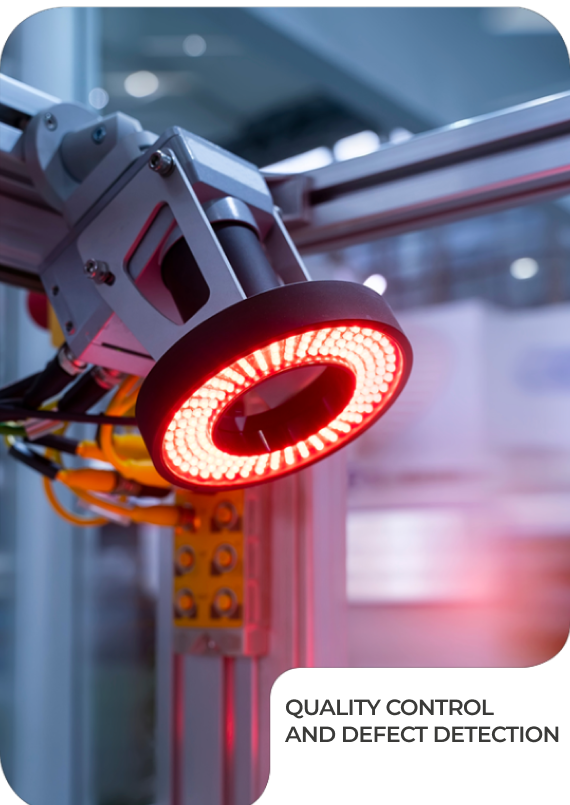
Machine vision systems automatically detect defects such as scratches, cracks and colour distortions on the surface of manufactured products. They identify even micro-level errors that the human eye might miss with high accuracy. They make a great contribution to maintaining quality standards especially in the automotive, electronics, packaging, white goods, medical and food industries. - Object Recognition and Classification:
It enables automatic recognition and classification of different types of products on production lines. For example, placing different products in the correct packages during packaging processes becomes possible with these systems. - Robotic Applications:
Industrial robots can precisely manipulate objects by perceiving their position, size and orientation thanks to machine vision systems. The efficiency of robots increases especially in assembly lines and material handling processes. - Measurement and Alignment:
Machine vision systems can measure the dimensions and geometric properties of products with millimetre precision. They ensure the correct alignment of components even in complex products such as printed circuit boards (PCBs). - Barcode and Text Reading (OCR):
It automatically reads barcodes and serial numbers on products. Even printed texts are recognised quickly and accurately thanks to Optical Character Recognition (OCR) technology.