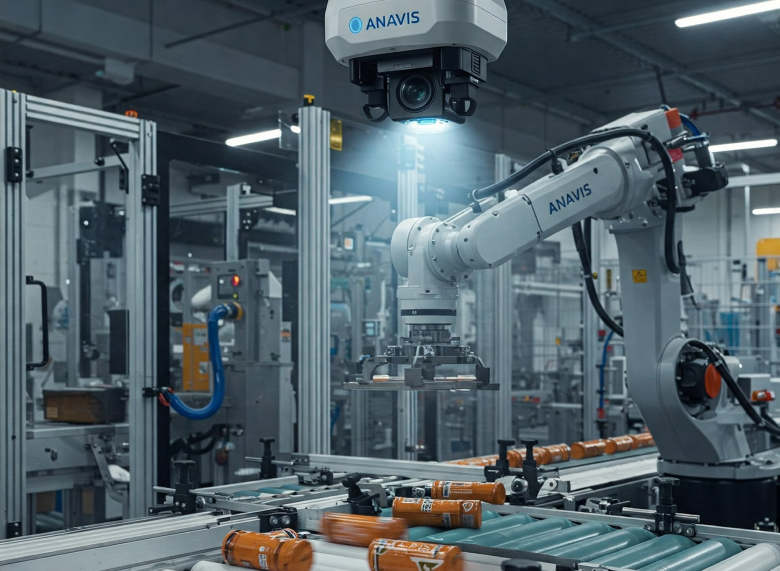
In today's fast-evolving global manufacturing landscape, the most critical success factor for industrial enterprises is sustainable operational efficiency gains. Rising raw material prices, increasing energy costs, and challenges in sourcing skilled labor compel manufacturers toward operational excellence. Industrial automation combined with AI-driven vision systems stands as the most powerful strategic tool to eliminate production bottlenecks and maximize Overall Equipment Effectiveness (OEE).
In this comprehensive guide, we explore the core pillars of increasing productivity in industrial automation projects, methods to eliminate unplanned downtime, and how machine vision transforms product quality.
1. What is Overall Equipment Effectiveness (OEE) & How to Improve It?
The primary metric for measuring manufacturing efficiency is OEE (Overall Equipment Effectiveness). OEE is calculated by multiplying three key operational components:
- Availability: The ratio of operating time versus unplanned downtime, setup changes, and equipment failures.
- Performance: Running speed compared to theoretical maximum capacity, accounting for micro-stoppages.
- Quality: The proportion of good units produced against total units, excluding defectives and re-works.
In world-class manufacturing facilities, target OEE levels exceed 85%. In non-automated, traditional manufacturing lines, OEE often stagnates between 45% and 55%. Every 10% improvement in OEE achieved through automation expands production output by 15% to 25% without requiring additional machinery investments.
2. Strategies to Eliminate Unplanned Downtime & Scrap Rates
Unplanned downtime represents a major hidden cost for manufacturing businesses. Especially in plastic injection molding, automotive sub-industries, and metal pressing, a single mold crash or ejector pin failure can halt production for hours and incur thousands of euros in damages.
Our vision-based mold protection systems inspect mold opening and closing cycles within milliseconds using high-speed industrial cameras. If stuck parts, misaligned cores, or plastic flash are detected, the system immediately halts the machine, eliminating mold damage and achieving zero unplanned downtime.
3. The Impact of Machine Vision Quality Inspection on Productivity
Manual quality inspections by human operators cannot guarantee 100% reliability due to fatigue, distraction, and subjective evaluation. Furthermore, manual inspection creates a severe bottleneck that slows down cycle times.
Industrial machine vision solutions inspect products at full line speeds with sub-millimeter precision. Vision-assisted automation delivers significant operational advantages:
- Defect Detection & Sorting: Instant detection of rejects using color verification, type verification, and burr controls.
- High-Speed Measurement: Non-contact dimensional checks via visual measurement systems without stopping the line.
- Full Traceability: Complete product genealogy logging with 1D-2D code verification and character reading (OCR/OCV).
4. Calculating Return on Investment (ROI) in Automation Projects
The financial success of an industrial automation project is determined by its payback period. A typical ROI calculation evaluates key performance drivers:
- Labor Optimization: Automating repetitive or hazardous tasks with pick and place robotic systems.
- Material & Energy Savings: Substantial reduction in raw material scrap and power consumption.
- Capacity Expansion: 24/7 continuous operation with optimized shift output.
For well-designed machine vision and automation implementations, average payback periods (ROI) range between 3 to 8 months.
Conclusion: Digital Transformation in Manufacturing with ANAVIS
Industrial automation goes far beyond operating machinery automatically; it is about processing real-time inspection data to make manufacturing intelligent. At ANAVIS, we combine deep engineering experience with advanced software solutions to deliver maximum productivity, zero defect rates, and uninterrupted quality.
To discover efficiency opportunities on your production lines and explore custom automation solutions, feel free to request a free demo or contact our engineering team.